

Research work has changed fast over the last two years. What once took days inside libraries, with PDFs and browser tabs, can now be done in hours with the right AI workflow. Yet most people still use AI poorly; they either rely on generic chatbots for everything or ignore AI completely because they worry about accuracy.
That middle ground is where the real productivity lives.
The best AI tools for research work do not replace critical thinking but reduce repetitive effort, organize information, summarize dense studies, and help researchers focus on analysis instead of busywork. Whether you’re writing a thesis, preparing a market report, reviewing scientific papers, or handling corporate research, the right tools can save serious time without lowering quality.
What are AI Tools for Research Work?
AI tools for research work are software platforms that help users collect, analyze, summarize, organize, and write research-related content faster. Some tools specialize in finding reliable academic sources. Others help with citation management, literature reviews, note organization, or drafting research papers.
A few years ago, researchers mostly depended on Google Scholar, spreadsheets, and manual note-taking. That setup still works, but it is slow for the workloads people deal with today.
Today, AI tools can:
- Summarize long research papers in seconds
- Generate references and citations
- Identify gaps in the literature
- Compare studies across topics
- Extract insights from PDFs
- Improve academic writing quality
- Help structure research papers
- Simplify scientific research workflows
Still, not every AI tool deserves the hype, as some are brilliant for academic research, while others sound smart but fluctuate with facts too often. We have tested many of these tools while working on long-form content, including articles, blogs, scripts and data-heavy research projects. The biggest lesson we learned is that one AI tool is not enough. Strong research usually comes from combining 2 to 4 tools strategically.
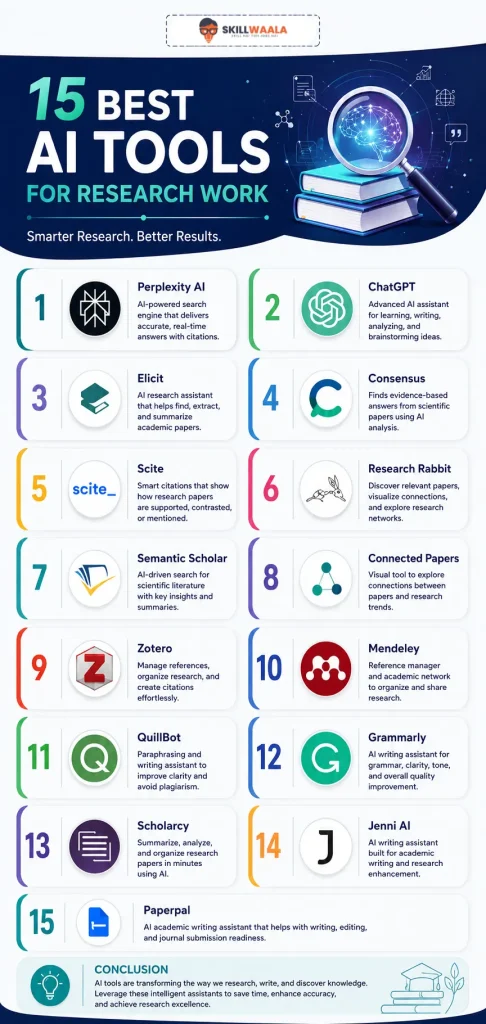
15 Best AI Tools for Research Work Comparison Table
| Tool | Best For | Free Plan | Pricing | Key Strength |
| Perplexity AI | Research discovery | Yes | Paid Pro available | Real-time sourced answers |
| ChatGPT | Research assistance | Yes | Plus available | Versatile brainstorming |
| Elicit | Literature review | Yes | Paid plans | Research paper analysis |
| Consensus | Scientific research | Yes | Premium available | Evidence-based answers |
| Scite | Citation analysis | Limited | Paid | Smart citation tracking |
| Research Rabbit | Literature mapping | Yes | Free | Research visualization |
| Semantic Scholar | Academic search | Yes | Free | AI-powered paper discovery |
| Connected Papers | Research connections | Limited | Paid | Visual research graphs |
| Zotero | Citation management | Yes | Free | Reference organization |
| Mendeley | PDF organization | Yes | Free/Premium | Academic workflow |
| QuillBot | Academic rewriting | Yes | Premium available | Writing enhancement |
| Grammarly | Editing and clarity | Yes | Premium available | Grammar and tone |
| Scholarcy | Paper summaries | Limited | Paid | Quick research digestion |
| Jenni AI | AI research writing | Limited | Paid | Structured academic writing |
| Paperpal | Academic editing | Yes | Paid plans | Scientific writing support |
Top 15 Best AI Tools for Research Work
1. Perplexity AI
What It Does
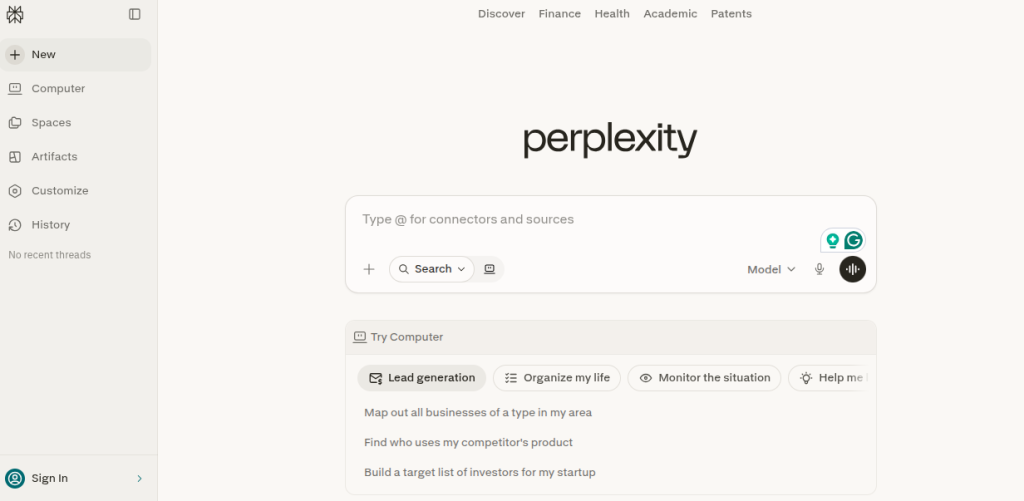
Perplexity AI has become one of the strongest tools for modern research workflows. Unlike traditional AI chatbots, it provides answers with source citations in real time.
This matters more than people think.
Most researchers waste hours verifying claims manually. Perplexity shortens that process significantly.
Best Use Cases
- Topic discovery
- Research paper exploration
- Market research
- Quick literature review
- Fact-checking
Benefits
- Sources included directly in responses
- Fast web-based research
- Clean interface
- Strong for current information
Pricing
- Free plan available
- Pro version for advanced models and deeper research
Pros
- Excellent for exploratory research
- Better citation visibility than many AI tools
- Great balance between speed and accuracy
Cons
- Occasionally oversimplifies complex academic topics
- Needs manual verification for high-stakes research
Alternative
Consensus
2. ChatGPT

What It Does
ChatGPT works best as a research assistant rather than a primary research source.
Many people misuse it by asking for complete research papers. That usually produces shallow work. The smarter approach is using it for outlining, summarizing, brainstorming, and simplifying technical concepts.
Best Use Cases
- Research planning
- Draft structuring
- Idea generation
- Simplifying technical language
Benefits
- Extremely flexible
- Supports multiple workflows
- Speeds up early-stage research
Pricing
- Free version available
- Paid plans unlock stronger models
Pros
- Fast responses
- Useful across industries
- Helpful for beginners and professionals alike
Cons
- Can generate inaccurate citations
- Requires fact-checking
Alternative
Claude AI
Top 10 AI Tools to Save Your Time
Discover smart AI tools that automate repetitive tasks, improve workflow efficiency, and help you save valuable time in work, content creation, and daily productivity.
Save Time with AI3. Elicit
What It Does
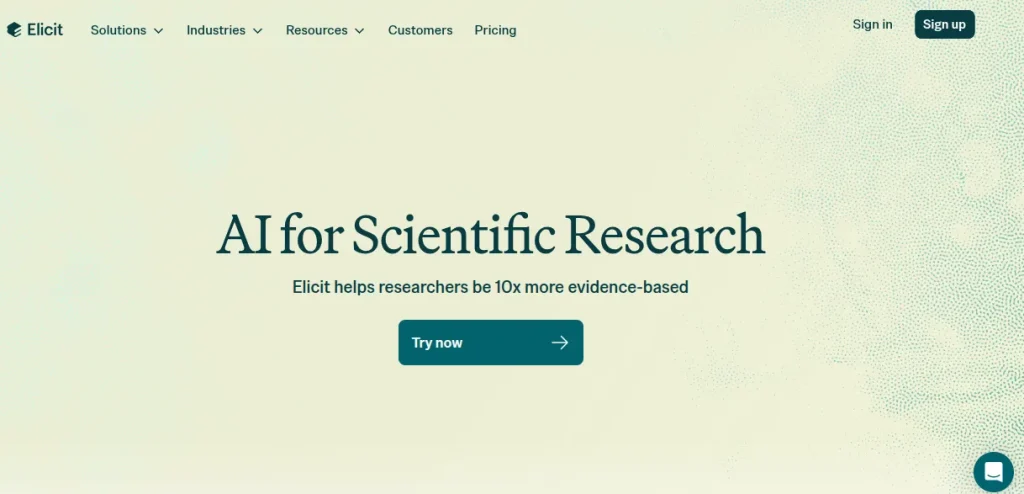
Elicit focuses heavily on academic workflows. It helps users analyze papers, extract findings, and identify patterns across studies.
I particularly like it for literature reviews because it cuts through information overload quickly.
Best Use Cases
- Literature review
- Academic synthesis
- Research comparison
Benefits
- Structured research extraction
- Saves reading time
- Strong academic focus
Pricing
- Free plan available
- Paid research tiers
Pros
- Designed specifically for researchers
- Excellent paper analysis
Cons
- Learning curve for beginners
- Less useful for casual research
Alternative
Research Rabbit
4. Consensus
What It Does
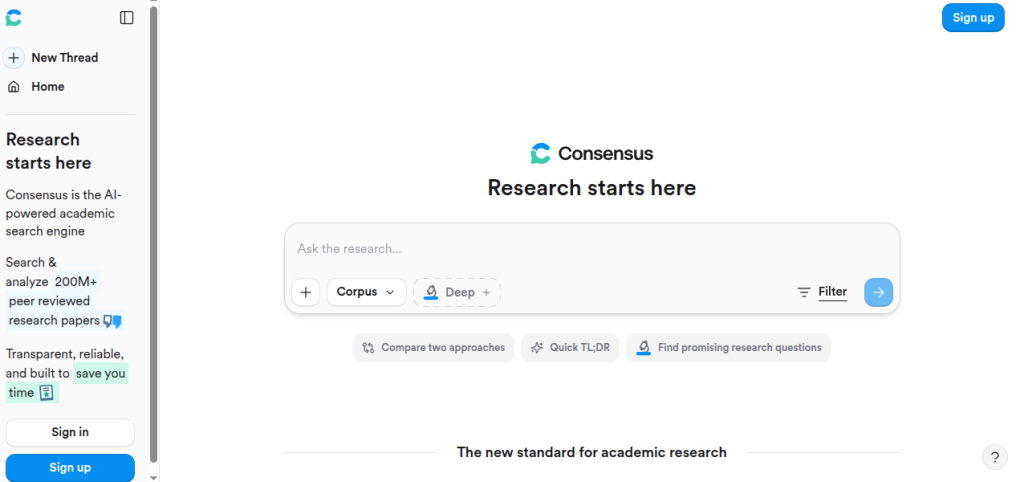
Consensus searches scientific studies and provides evidence-backed answers instead of random web content.
This thing matters a lot, especially for medical, psychology, and scientific research.
Best Use Cases
- Scientific research
- Evidence-based queries
- Academic validation
Benefits
- Pulls insights from peer-reviewed studies
- Reduces misinformation risk
Pricing
- Free plan available
- Premium features available
Pros
- Reliable scientific focus
- Clean summaries
Cons
- Narrower database compared to Google Scholar
- Less useful for non-academic topics
Alternative
Semantic Scholar
AI Tools That Require No Coding
Explore easy-to-use AI tools designed for beginners and non-technical users to automate tasks, create content, boost productivity, and work smarter without coding skills.
Discover No-Code AI Tools5. Scite
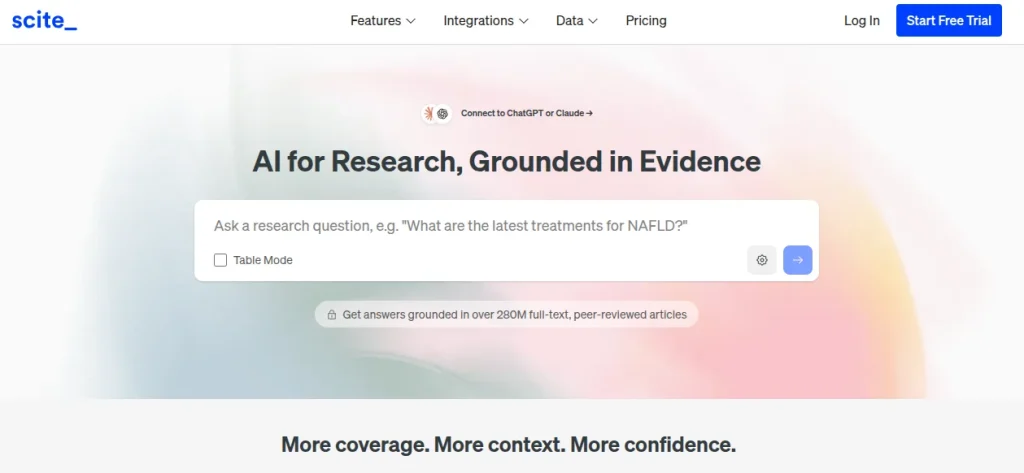
What It Does
Scite helps researchers understand how papers are cited. Instead of simply counting citations, it shows whether later studies support or contradict findings.
That is incredibly useful when evaluating research credibility.
Benefits
- Smarter citation analysis
- Better research validation
- Helpful for academic writing
Pricing
- Limited free access
- Paid subscription
Pros
- Excellent citation context
- Strong for scientific research
Cons
- Premium features needed for full value
Alternative
Web of Science
6. Research Rabbit

What It Does
Research Rabbit visualizes connections between papers, authors, and topics.
Think of it as Spotify recommendations for research papers.
Benefits
- Makes discovery easier
- Excellent visualization
- Useful for niche topics
Pricing
Free
Pros
- Unique interface
- Great for deep exploration
Cons
- Not ideal for beginners
Alternative
Connected Papers
50 Best Beginner-Friendly AI Tools
Explore 50 easy-to-use AI tools perfect for beginners to create content, automate tasks, improve productivity, and simplify daily work without technical knowledge.
Explore Beginner AI Tools7. Semantic Scholar
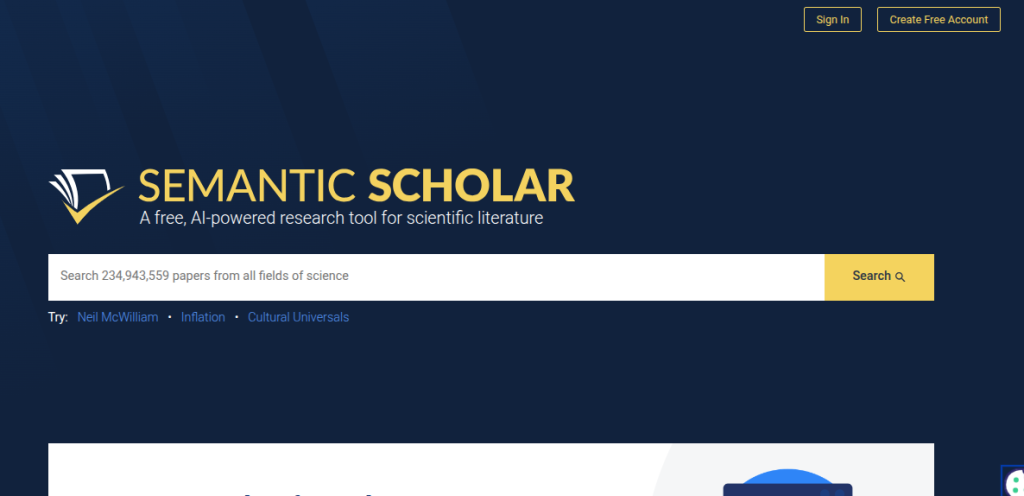
What It Does
Semantic Scholar uses AI to improve academic paper discovery.
Benefits
- Large academic database
- AI-powered recommendations
- Free access
Pros
- Strong search accuracy
- Helpful filters
Cons
- Interface feels basic
Alternative
Google Scholar
8. Connected Papers
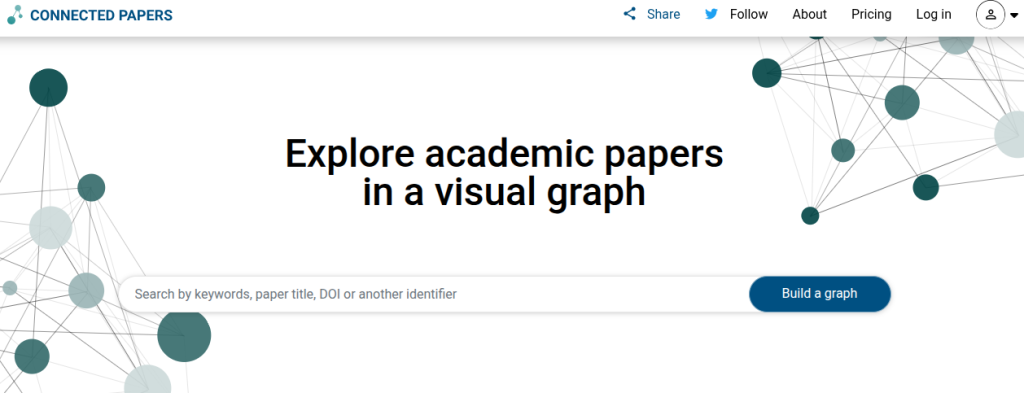
What It Does
Connected Papers creates visual graphs showing relationships between studies.
Benefits
- Identifies influential papers
- Great for topic mapping
Pricing
Limited free use
Pros
- Excellent visualization
- Useful for thesis work
Cons
- Free limits are restrictive
Alternative
Research Rabbit
Easy AI Tools for Beginners
Discover simple and beginner-friendly AI tools that help you create content, automate tasks, boost productivity, and work smarter without any technical knowledge.
Start Using Easy AI Tools9. Zotero
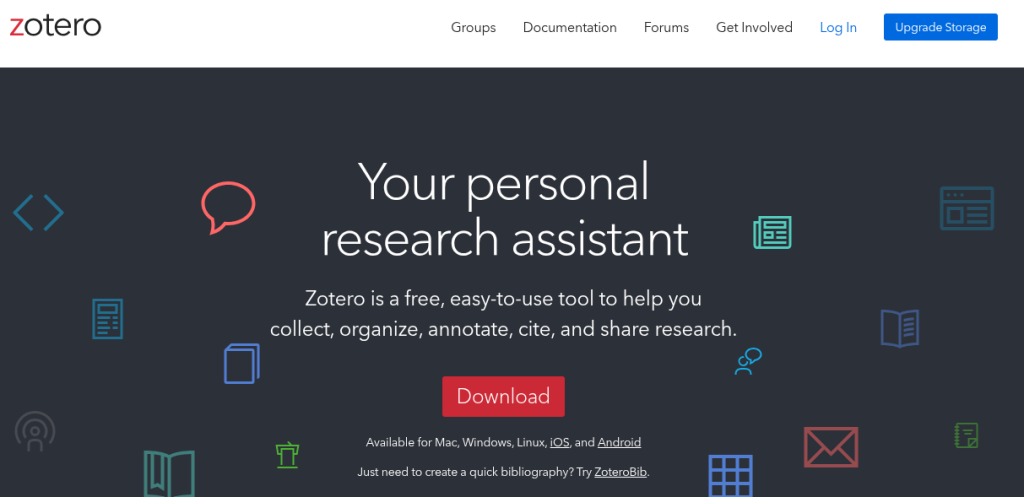
What It Does
Zotero remains one of the most practical free AI for research paper writing workflows when combined with AI summarization tools.
Benefits
- Citation management
- PDF storage
- Browser integration
Pricing
Free
Pros
- Reliable
- Academic favorite
Cons
- Interface feels outdated
Alternative
Mendeley
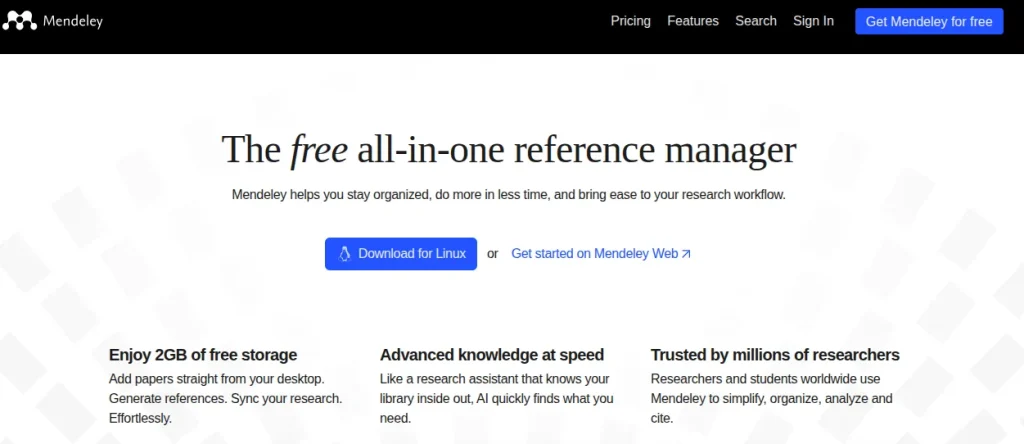
10. Mendeley
What It Does
Mendeley helps organize papers, annotations, and references.
Benefits
- Easy document management
- Collaboration features
Pricing
Free with premium storage options
Pros
- Good PDF annotation tools
- Strong academic usage
Cons
- Sync issues occasionally
Alternative
Zotero
How to Learn AI Tools
Learn the easiest way to start using AI tools step-by-step, discover beginner-friendly resources, and build practical AI skills for content creation, productivity, and daily work.
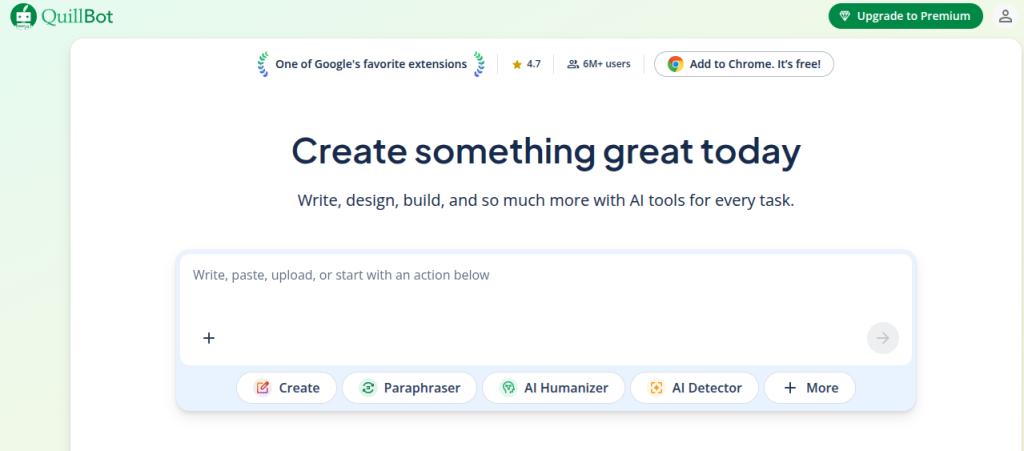
Start Learning AI Today11. QuillBot
What It Does
QuillBot improves clarity and rewrites academic content.
Benefits
- Better readability
- Useful paraphrasing
- Grammar assistance
Pricing
Free and premium plans
Pros
- Quick rewriting
- Helpful for editing drafts
Cons
- Can over-simplify academic writing
Alternative
Wordtune
12. Grammarly
What It Does
Grammarly remains one of the simplest but most valuable AI tools for research work.
Researchers often underestimate how much weak sentence flow affects credibility.
Benefits
- Grammar correction
- Clarity improvement
- Tone suggestions
Pricing
Free version available
Pros
- Easy to use
- Excellent for final editing
Cons
- Not research-specific
Alternative
ProWritingAid
How to Make Money With AI Tools
Learn practical ways to earn money using AI tools for content creation, freelancing, automation, digital marketing, and online business growth.
Start Earning With AI13. Scholarcy

What It Does
Scholarcy summarizes dense academic papers into digestible insights.
Benefits
- Fast paper breakdowns
- Key point extraction
Pricing
Limited free access
Pros
- Saves time
- Great for quick review
Cons
- Summaries still need manual validation
Alternative
Explainpaper
14. Jenni AI
What It Does
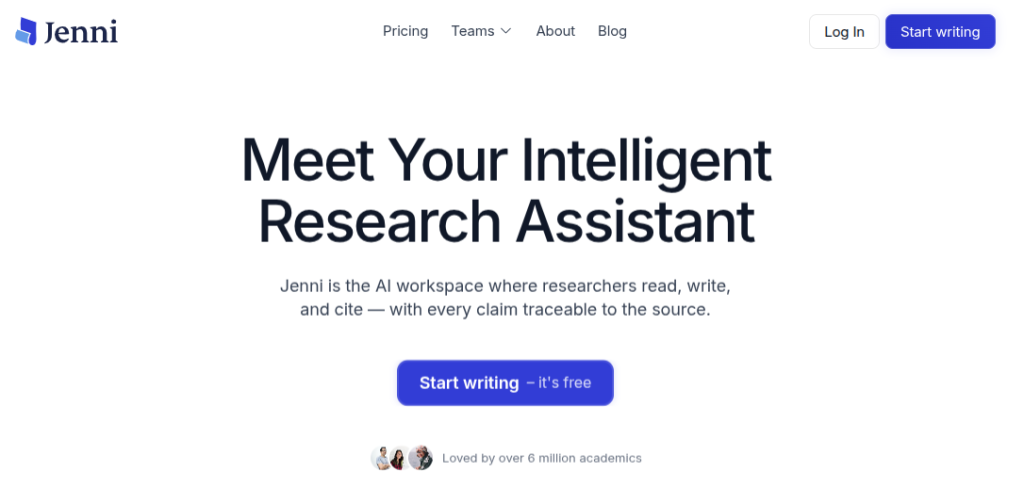
Jenni AI focuses on academic writing support.
Benefits
- Structured drafting
- Citation assistance
Pricing
Free trial available
Pros
- Research-focused writing flow
Cons
- Better for drafting than researching
Alternative
Paperpal
Create Better Presentations With AI
Learn how AI-powered presentation tools can help you design engaging slides, improve visuals, and present ideas more effectively.
Build Smarter Presentations15. Paperpal
What It Does
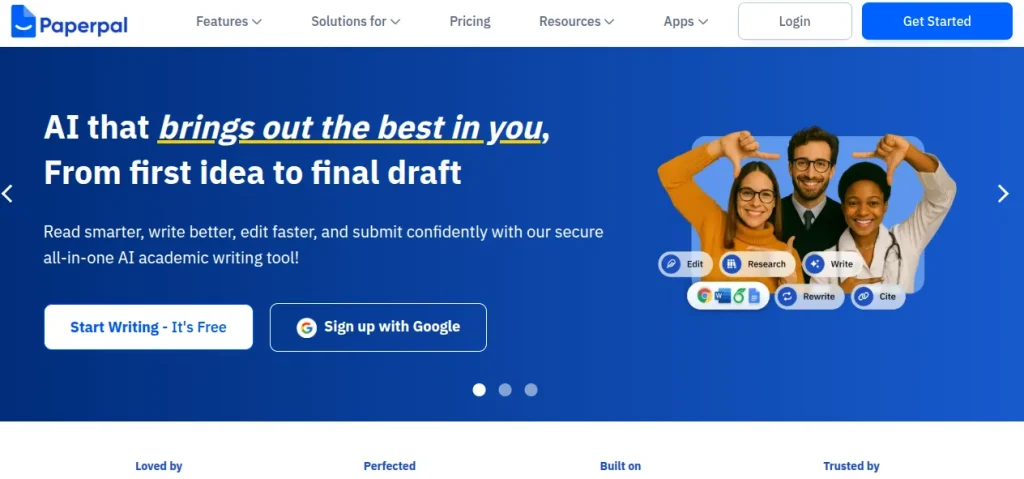
Paperpal is built specifically for scientific and academic writing improvement.
Benefits
- Academic editing
- Technical writing enhancement
Pricing
Free and premium plans
Pros
- Strong for journal submissions
- Better academic tone correction
Cons
- Premium required for advanced features
Alternative
Grammarly

How to Choose the Best AI Tools for Research Work
Not every researcher needs the same setup. A college student writing assignments may only need Perplexity AI research support, ChatGPT, and Grammarly. A PhD researcher handling scientific literature may benefit more from Scite, Elicit, and Semantic Scholar.
The smartest approach usually looks like this:
For Literature Reviews
- Elicit
- Research Rabbit
- Connected Papers
For Academic Writing
- Jenni AI
- Paperpal
- Grammarly
For Research Discovery
- Perplexity AI
- Consensus
- Semantic Scholar
For Reference Management
- Zotero
- Mendeley
One mistake we see often is over-automation. AI should accelerate thinking, not replace it. Weak researchers copy outputs blindly. Strong researchers use AI to remove friction while keeping judgment human. That difference shows immediately in the final work quality.

Conclusion
The use of AI tools in research has really changed how people study and analyze information. These tools have also made writing research papers much easier. For example, tasks that used to take weekends can now be done in focused work sessions. This is because AI tools help people to work smarter. AI tools are changing the way research is done and making it more efficient.
Still, tool selection matters. The best AI tools for research paper writing are not necessarily the most expensive ones. In many cases, a combination of free platforms works surprisingly well. Tools like Perplexity AI, ChatGPT, Zotero, and Semantic Scholar already offer enough power for most researchers if used correctly.
The real advantage comes from building a workflow that fits your style of research. Some people need better organization. Others need faster summarization. Many simply need help cutting through information overload. Once you identify that bottleneck, choosing the right AI tool becomes much easier.
FAQ
Perplexity AI is one of the best overall tools for research work because it combines AI-generated answers with live citations and web sources. For academic literature reviews, tools like Elicit and Consensus are also highly effective.
You can learn such tools for free by watching YouTube videos, taking online classes, and trying things out yourself. If you are new to Artificial Intelligence tools and want to learn in a simple way, SkillWaala has a free AI tools course. This course teaches you how to use intelligence tools in a practical way, how to be more productive with these tools, and how to do research with them. It is easy to understand, even if you are just starting out with intelligence tools.
ChatGPT, Zotero, and Semantic Scholar together create a strong free AI for research paper writing workflow. They help with outlining, citations, and academic paper discovery without requiring major investment.
AI tools can help with drafting sections of research papers. They can also summarize studies and improve the language used. Additionally, AI tools are also useful for organizing ideas. However, it is not a good idea to rely entirely on AI tools to write research papers. This is because AI tools can make mistakes and can even include fake citations. Therefore human review is key.
Not always. Some AI research paper tools generate incorrect or non-existent citations. Citation-focused platforms like Scite and Zotero are generally more reliable for academic referencing.
For research, the best tools to use are Consensus, Scite, Semantic Scholar and Elicit. These tools are really good for studies, with a heavy focus on peer-reviewed research and evidence-based insights.
Yes. Perplexity AI is highly useful for academic research because it provides sourced answers quickly. It works especially well during early-stage topic exploration and research discovery. However, users should still verify sources manually before citing them in formal academic work.
About The Author