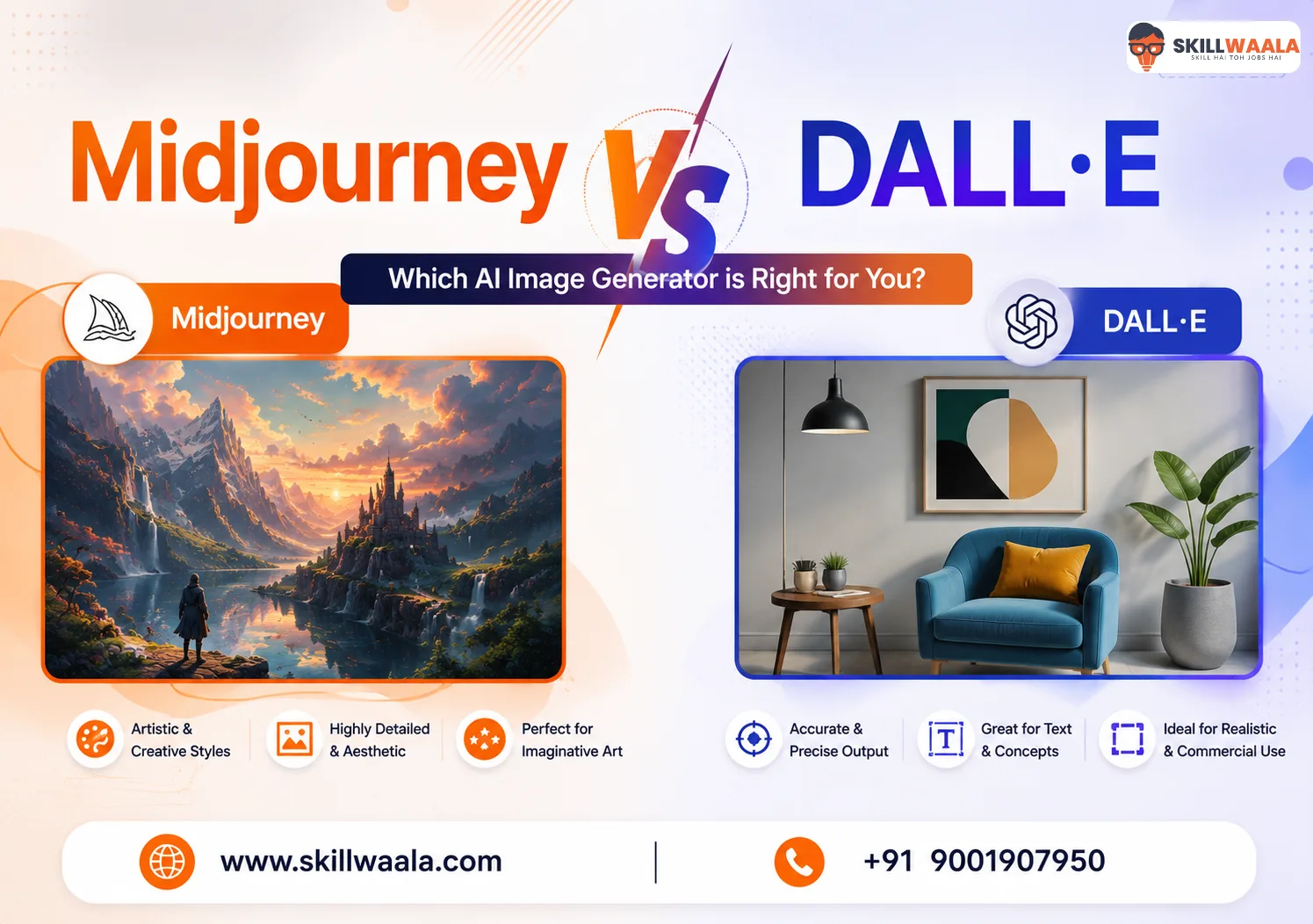
AI image generators are getting better fast, but choosing between them isn’t getting any easier. Midjourney and DALL-E are both capable, yet I’ve found they shine in very different situations.
Midjourney usually grabs me with its aesthetics and creative styles, while DALL-E can be easier when I want the tool to follow a specific idea without endless prompt tweaking. But neither wins at everything.
In this Midjourney vs DALL-E comparison, I’ll look at image quality, prompt accuracy, ease of use, pricing, editing, and real-world use cases to find out which one is better in 2026.
Midjourney vs DALL-E: Quick Comparison
If you don’t want to dig through every feature before choosing, here’s the short version. Midjourney is my pick for visually impressive, artistic images, while DALL-E is easier to approach when prompt understanding and convenience matter more.
| Feature | Midjourney | DALL·E |
|---|---|---|
| Image Quality | Excellent | Very Good |
| Photorealism | Excellent | Good |
| Artistic Styles | Excellent | Very Good |
| Prompt Understanding | Very Good | Excellent |
| Text in Images | Weak | Better |
| Ease of Use | Moderate learning curve | Beginner-friendly |
| Creative Control | Excellent | Good |
| Best For | Designers, creators, professional visuals | Beginners, quick concepts, everyday image creation |
My pick: Start with DALL-E if you’re completely new to AI image generation. Learn Midjourney if visual quality and creative control are skills you want to develop seriously.
What is Midjourney?
Midjourney is an AI image generator built for creating images from text prompts and visual references. You describe what you want, and it generates multiple interpretations that you can refine, edit, or use as a starting point for something new.
My Midjourney review is fairly straightforward. Its biggest strength is aesthetics. Even relatively simple prompts can produce images with strong lighting, composition, textures, and cinematic detail. I particularly like it for concept art, illustrations, realistic characters, advertising concepts, and visuals where I want something more distinctive than a typical AI-generated image.
There is a learning curve, though. Getting exactly what you imagined often requires experimenting with prompts, references, parameters, and Midjourney’s editing controls.
What Midjourney Does Well?
- Produces polished and visually striking images
- Handles photorealism, illustrations, and artistic styles well
- Offers strong control through style and image references
- Works well for concept art, portfolio projects, marketing creatives, and visual experimentation
- Gives experienced users plenty of room to develop a recognizable visual style
For casual image generation, some of that control can feel unnecessary. For someone serious about learning AI-assisted visual creation, it’s exactly what makes Midjourney interesting.
What is DALL-E?
DALL-E is OpenAI’s image generation model for creating and editing visuals using natural-language instructions. Unlike Midjourney, the experience feels less like learning a specialized design tool and more like simply explaining what you want.
That simplicity is what stands out in my DALL-E review. You can describe an image conversationally, ask for changes, and keep refining it without learning a long list of parameters.
It makes DALL-E particularly approachable for presentations, social media graphics, quick concepts, and experimenting with AI-generated visuals.
What DALL-E Does Well?
- Understands detailed, conversational prompts well
- Makes iterative image editing relatively simple
- Handles images containing text better than Midjourney
- Requires very little technical knowledge to get started
- Fits naturally into a ChatGPT-based workflow
Note: DALL·E is no longer OpenAI’s latest image generation model. ChatGPT now uses the newer ChatGPT Images 2.0 models by default for image creation. While DALL·E is still available in certain contexts, this comparison with Midjourney remains useful for understanding their core strengths and differences. Just keep in mind that ChatGPT’s current image generation capabilities go beyond the original DALL·E models.
Midjourney vs DALL-E: Head-to-Head Comparison
This is where the Midjourney comparison with DALL-E gets interesting. Both can generate impressive images, but after a few prompts, their differences become fairly obvious.
1. Image Quality & Photorealism
Winner: Midjourney
Midjourney wins this one for me. Its images often have better lighting, textures, depth, and overall visual polish. Portraits and cinematic scenes can look surprisingly convincing without requiring an extremely detailed prompt.
DALL-E can produce realistic images too, but they sometimes have a cleaner, slightly more “AI-generated” appearance.
2. Prompt Understanding & Accuracy
Winner: DALL-E
DALL-E is much easier when your prompt contains several specific instructions. You can describe what you want naturally instead of learning how to structure prompts around a particular tool.
Midjourney has improved considerably here, but I still find myself tweaking prompts when composition or object placement matters.
3. Artistic Styles & Creativity
Winner: Midjourney
This is Midjourney territory. From editorial illustrations and anime-inspired visuals to surreal artwork and cinematic photography, there’s an enormous amount of stylistic flexibility.
DALL-E is capable creatively, but Midjourney gives me more images that feel worth saving even when the initial prompt is fairly ordinary.
4. Text Generation Inside Images
Winner: DALL-E
Midjourney has historically struggled with text, and I wouldn’t choose it specifically for text-heavy graphics.
DALL-E generally does a better job when you need readable words inside posters, signs, thumbnails, or other visuals.
Neither replaces a proper design tool when text accuracy really matters.
5. Ease of Use
Winner: DALL-E for beginners
DALL-E has the gentler learning curve. You can describe an image, see the result, and request changes conversationally.
Midjourney takes more experimentation. Once you understand references, parameters, editing, and prompting techniques, however, that extra complexity starts feeling more like control than inconvenience.
6. Image Editing & Control
Winner: Midjourney for control; DALL-E for simplicity
DALL-E makes simple edits convenient because you can explain the change you want in plain language. For quick edits, I prefer DALL-E.
Midjourney gives experienced users deeper creative control through tools for editing, variations, references, style consistency, and composition. For deliberately shaping an image over several generations, I’d choose Midjourney.
Confused between ChatGPT and Google Gemini? Why choose just one? Learn both with practical projects, real-world use cases, prompt engineering, content creation, automation, and productivity hacks.
Read Full Comparison HereMidjourney vs DALL-E: Testing Them With the Same Prompts
Feature lists are useful, but image generators are much easier to judge when you give them the same job. So, for this comparison, I tested the kinds of visuals people are actually likely to create rather than obscure prompts designed to trip the models up.
Test 1: Photorealistic Portrait
Prompt: “A photorealistic portrait of a young entrepreneur working in a modern cafe, natural window light, candid expression, laptop on table.”
Midjourney:

DALL-E:

Midjourney produces the more convincing photograph. Lighting, skin texture, and depth looked natural, while DALL-E followed the requested scene well but felt slightly more generated.
Winner: Midjourney
Test 2: Product Advertisement
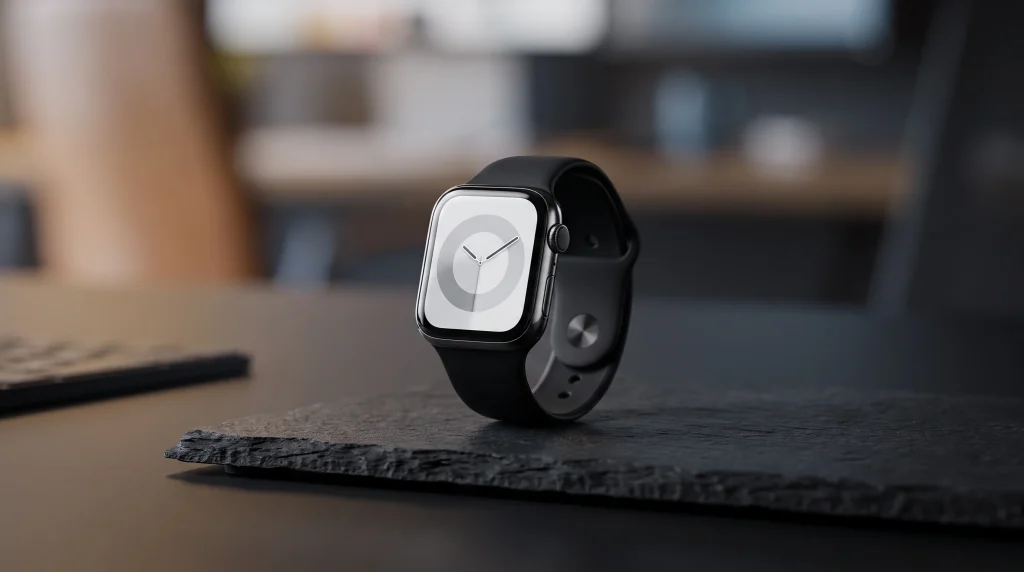
Prompt: “Create a premium advertisement for a black smartwatch on a minimalist desk, dramatic studio lighting, luxury technology campaign.”
Midjourney:
DALL-E:
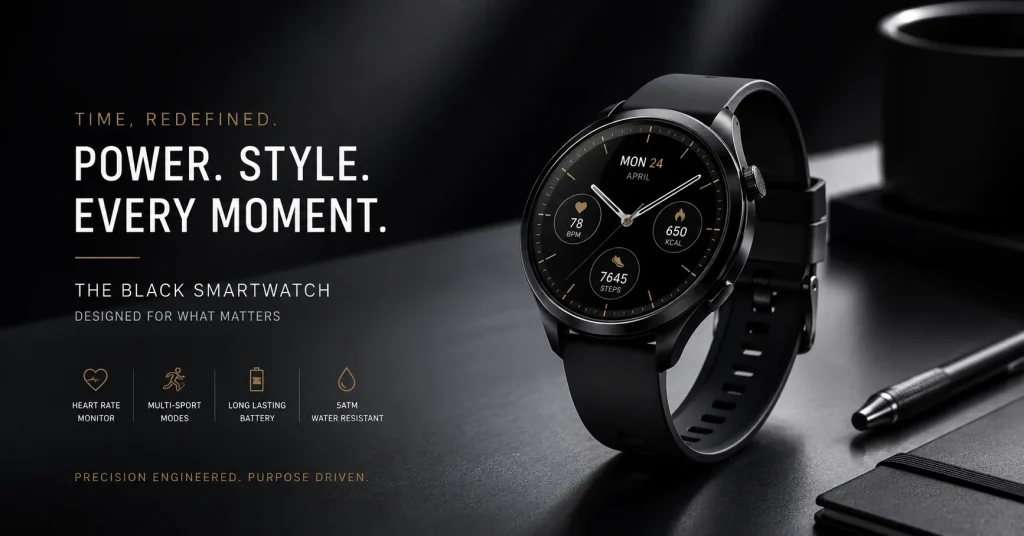
Both produced usable concepts. Midjourney gave me the stronger advertising aesthetic almost immediately, while DALL-E did a better job of respecting individual instructions.
Winner: DALL-E
Test 3: Creative Illustration
Prompt: “An illustration of a student opening a laptop and discovering an entire futuristic city inside it.”
Midjourney:
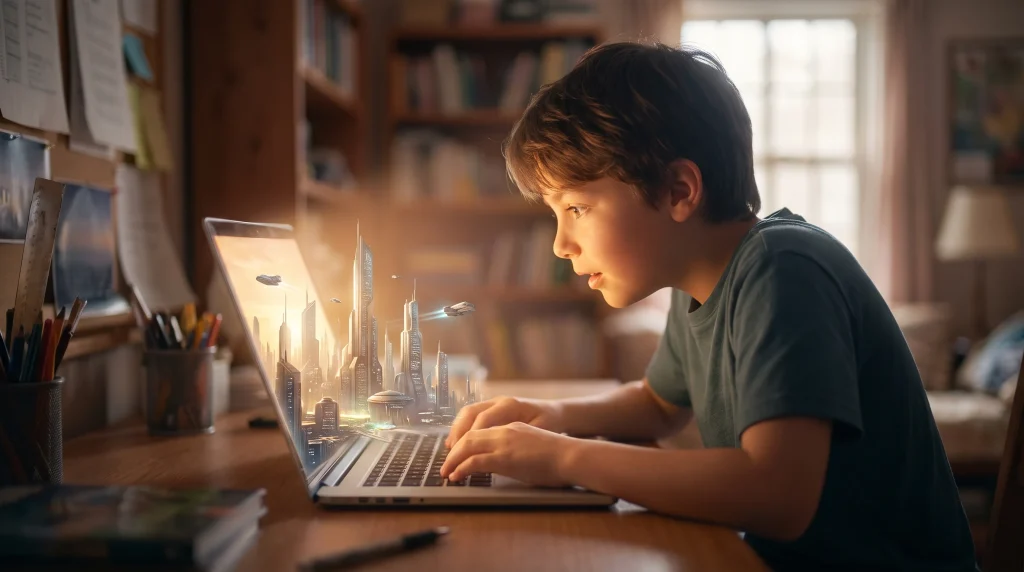
DALL-E:
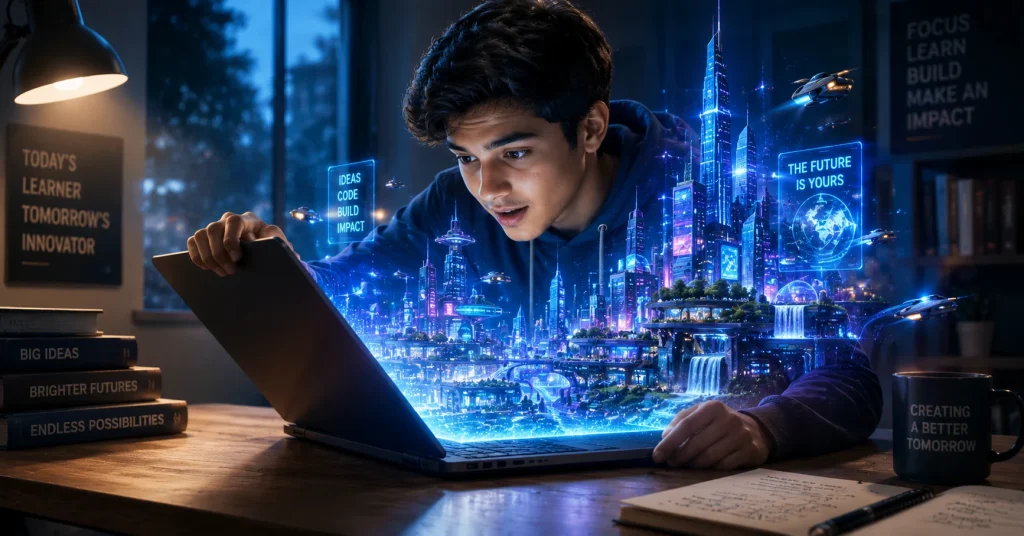
This is exactly the kind of visual metaphor where I prefer Midjourney. Its interpretation felt more imaginative and visually polished rather than simply illustrating the prompt literally.
Winner: DALL-E
Test 4: Text-Heavy Graphic
Prompt: “Create a modern poster with the headline ‘LEARN AI’ in large bold letters and ‘Build Skills for Tomorrow’ underneath.”
Midjourney:

DALL-E:

Here, the advantage flips. DALL-E handled the requested wording more reliably, while Midjourney remains a tool I wouldn’t trust for text-heavy designs without fixing the typography separately.
Winner: Midjourney
Limitations of Midjourney and DALL-E
Neither tool is perfect, and some weaknesses only become obvious once you start using them regularly.
Limitations of Midjourney
My biggest frustration with Midjourney is precision. It can create a gorgeous image while quietly ignoring one part of your prompt. Other drawbacks include:
- Poor reliability with text inside images
- A steeper learning curve for advanced controls
- Multiple attempts may be needed for precise compositions
- Consistent characters and fine details can still require tweaking
- No free plan for casual experimentation.
Limitations of DALL-E
The limitations of DALL-E are almost the opposite. It is easier to direct, but the results don’t always have Midjourney’s visual punch.
- Less stylistic control than Midjourney
- Photorealistic images can sometimes look noticeably AI-generated
- Complex compositions may still produce visual mistakes
- Safety restrictions can reject or modify certain prompts
- Less appealing for users who want extensive control over styles and generation settings.
Canva vs Adobe Express: Which Design Tool Is Better?
Canva and Adobe Express both make professional design easier, but they excel in different areas. Compare their templates, design features, AI tools, stock assets, brand tools, integrations, pricing, video editing, and ease of use to find the right platform for your creative workflow.
Read the Full Canva vs Adobe Express Comparison →Which is Better: Midjourney vs DALL-E?
So, which is better, Midjourney vs DALL-E? I’d choose based on what you actually plan to do with it rather than which tool has the longer feature list.
| Use Case | Better Choice |
|---|---|
| Learn AI image generation from scratch | DALL·E |
| Create portfolio-quality visuals | Midjourney |
| Generate realistic or cinematic images | Midjourney |
| Create quick visuals for presentations | DALL·E |
| Experiment with different artistic styles | Midjourney |
| Follow detailed prompts accurately | DALL·E |
| Create professional marketing concepts | Midjourney |
Which AI Image Generator is Best for Beginners?
DALL-E is the easier starting point. You can write prompts conversationally, request changes in plain language, and get useful results without learning parameters or advanced prompting techniques.
Which AI Image Generator is Best for Professionals?
I’d lean towards Midjourney, particularly for designers, marketers, content creators, and anyone whose work depends heavily on visual quality. The learning curve is higher, but so is the level of creative control.
Still Comparing AI Image Generators?
Explore our detailed Midjourney vs Leonardo AI comparison and find out which AI image generator is better for image quality, photorealism, creative control, editing, ease of use, and more.
Read the Full Comparison →Best Midjourney and DALL-E Alternatives
Midjourney and DALL-E aren’t your only options. I regularly recommend experimenting with a few generators because each handles certain visual tasks differently.
- Adobe Firefly: A practical choice for designers already working with Photoshop, Illustrator, or other Adobe tools. Its editing workflow is a bigger attraction than generation alone.
- Google Gemini: It is worth trying for conversational image creation and iterative edits, especially when you want to keep refining an idea through prompts.
- Ideogram: One of my preferred Midjourney alternatives when typography matters. It is particularly useful for posters, ads, thumbnails, and social graphics containing text.
- Leonardo AI: A capable DALL-E alternative for users who want more control over styles, assets, and creative workflows.
I wouldn’t try to master all of them at once. Pick one based on the kind of images you create most often, learn its workflow properly, and then branch out when you hit its limitations.

Final Words
There isn’t a universal winner in the Midjourney vs DALL-E debate. Midjourney is the tool I’d choose when visual quality, artistic style, and creative control matter most. DALL-E makes more sense when I want something approachable, conversational, and quick to iterate.
If you’re just starting out, I learn one tool properly rather than jumping between every new AI generator. Once you understand prompting, composition, and iteration, switching tools becomes surprisingly easy.
The real skill isn’t knowing Midjourney or DALL-E. It’s knowing which tool to reach for when you have an idea to create.
Frequently Asked Questions (FAQs)
Midjourney is better for artistic quality, photorealism, and creative control. DALL-E is generally easier to use and better at understanding detailed natural-language instructions. The better choice depends on what you want to create.
Not particularly, but there is a learning curve. Basic image generation is straightforward, while getting consistent, precise results requires learning prompts, references, parameters, and editing tools.
Yes. Both can fit into professional creative workflows, but always check the latest commercial-use terms before using generated images for client projects, advertising, or products.
No. Basic design knowledge certainly helps you judge composition, color, typography, and visual hierarchy, but you can start generating useful images without prior design experience.
Start with DALL-E if you want the easiest introduction to AI image generation. Choose Midjourney first if your main goal is developing stronger skills in AI-assisted design, visual storytelling, or professional creative work.
About The Author