

I used to think email marketing was mostly about writing good emails. Then I actually started doing it regularly. The writing was rarely the part that took the most time. Finding the right people, personalizing messages, setting up follow-ups, and checking what worked could turn a simple campaign into a surprisingly long task.
That’s why I started paying closer attention to AI tools for email marketing. Some genuinely reduce the workload. Others are basically ordinary email platforms with an AI button stuck on the dashboard.
So I went through the options and narrowed this list down to 10 tools worth considering in 2026. I’ll show you what each one does best, where it fits, and who should actually use it.
Let’s get into it.
Quick Comparison: Best AI Tools for Email Marketing
| Tool | Best For | AI Capabilities | Free Plan | Starting Price* |
|---|---|---|---|---|
| Snov.io | Email outreach | Personalization, ICP generation, AI email writing | Yes | $39/mo |
| ActiveCampaign | Email automation | AI content, predictive sending, automation | No | $15/mo |
| HubSpot | CRM + email marketing | AI content, segmentation, automation | Yes | $20/mo |
| Brevo | Affordable campaigns | AI email generation, send-time optimization | Yes | $9/mo |
| Mailchimp | Beginners | AI content, subject lines, campaign optimization | Yes | $13/mo |
| GetResponse | All-in-one marketing | AI email generator, subject lines, campaign creation | Yes | $19/mo |
| Omnisend | eCommerce | AI copy, product recommendations, automation | Yes | $16/mo |
| Klaviyo | eCommerce personalization | AI content, predictive analytics, segmentation | Yes | $20/mo |
| Constant Contact | Small businesses | AI content, subject lines, campaign assistance | No | $12/mo |
| Salesforce Marketing Cloud | Enterprise marketing | AI content, predictive insights, personalization | No | Custom |
*Starting price can fluctuate based on contact limits, billing cycle, region, and plan structure. Pricing should be verified on the respective official websites before making a purchase.
1. Snov.io: Best for AI-Powered Email Outreach
My Rating: 9/10
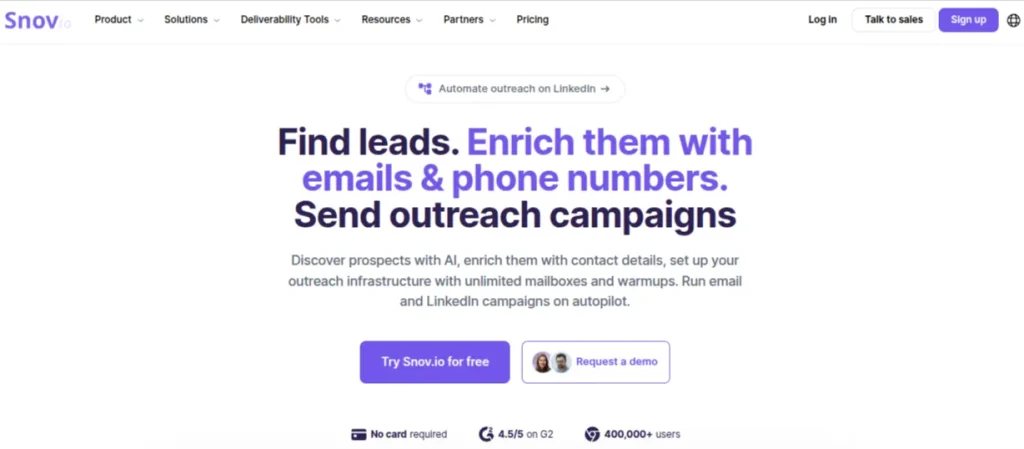
Snov.io is the tool I’d look at first if your email marketing involves finding prospects and reaching out to them, rather than sending a newsletter to an existing subscriber list.
Its AI features cover much of the outreach workflow. You can use AI to define an ideal customer profile, generate personalized email copy, create sequences, and analyze replies. That makes it particularly useful when you’re doing cold outreach and don’t want every email to sound like it was copied from the same template.
Key Features of Snov.io
- AI-powered email writing and personalization
- AI ICP Generator for defining target prospects
- Automated email sequences and follow-ups
- Prospect database and email finder
- Reply sentiment analysis
Pros & Cons
| Pros | Cons |
|---|---|
| Strong combination of prospecting and outreach | Better suited to outreach than newsletters |
| Useful AI personalization features | Advanced features require a paid plan |
| Good automation for follow-ups | Deliverability still depends on campaign practices |
| Built-in prospecting tools | Can be more than you need for basic email campaigns |
Pricing: A free plan is available. Paid plans start at $39/month when billed monthly
2. ActiveCampaign: Best for Advanced Email Automation
My Rating: 9/10
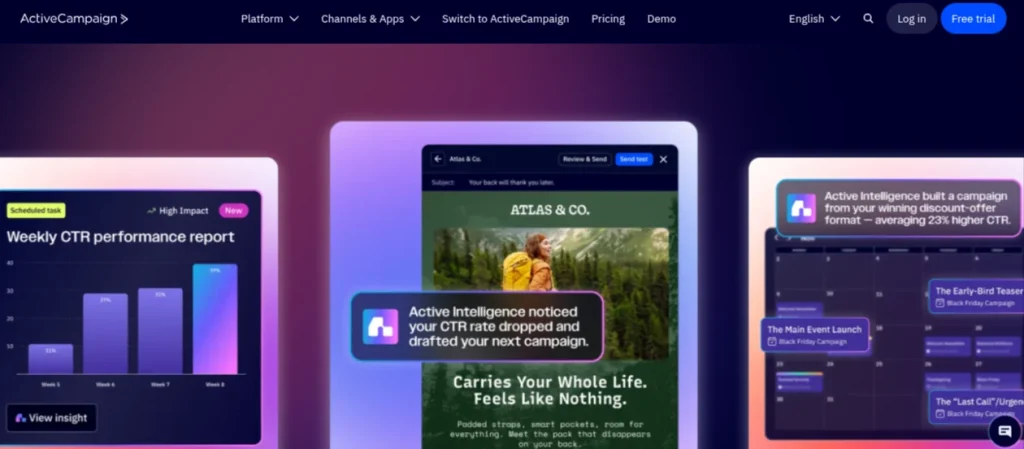
ActiveCampaign is the one I’d consider when email marketing starts becoming more complicated than sending a weekly newsletter. Its main strength is automation. You can build customer journeys based on actions, engagement, and other conditions instead of manually deciding who receives what.
Its AI features add another layer to that workflow, helping with email content and campaign optimization. If you’re managing multiple audience segments or building automated nurture sequences, ActiveCampaign gives you considerably more control than a basic email platform.
Key Features of Email Campaign
- AI-assisted email content creation
- Advanced marketing automation
- Audience segmentation
- Predictive sending and engagement tools
- Automated customer journeys
Pros & Cons
| Pros | Cons |
|---|---|
| Powerful automation builder | Can feel overwhelming for beginners |
| Strong segmentation options | No permanent free plan |
| Useful for complex customer journeys | Pricing increases with contact volume |
| Good balance of AI and traditional automation | More features than needed for basic campaigns |
Pricing: ActiveCampaign plans start at around $15/month, with pricing varying based on the number of contacts and plan features.
3. HubSpot: Best for CRM + Email Marketing
My Rating: 9/10
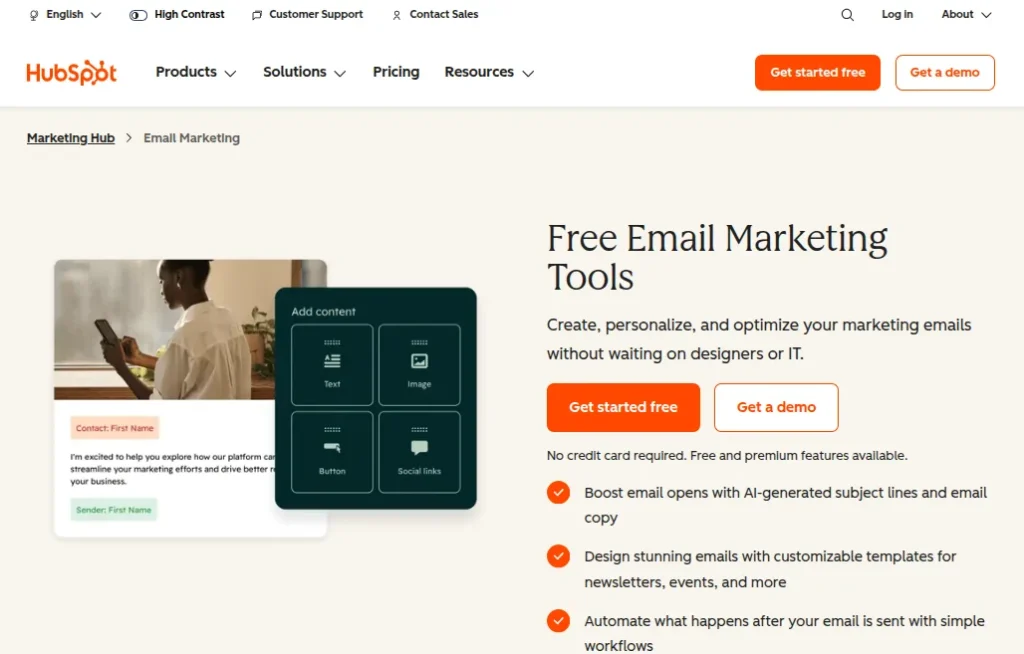
HubSpot makes sense when your email campaigns are connected to a broader sales or customer management workflow. Instead of treating email as a separate activity, you can manage contacts, campaigns, automation, and customer interactions from the same ecosystem.
Its AI tools can help generate and edit email copy. Meanwhile, its CRM gives you more context about who you’re contacting and where they are in their customer journey. For someone learning marketing automation, it’s also a useful platform to understand because the workflow goes well beyond writing emails.
Key Features of HubSpot
- AI-assited email content creation
- Built-in CRM
- Email automation and workflows
- Contact segmentation
- Campaign performance analytics
Pros & Cons
| Pros | Cons |
|---|---|
| Strong CRM and email integration | Advanced features can become expensive |
| Generous free tools | Can feel complex as your setup grows |
| Good AI writing assistance | Some automation features are paid |
| Useful analytics and contact data | Better suited to broader marketing workflows than basic newsletters |
Pricing: HubSpot offers free tools. Paid marketing features start at around $20/month.
4. Brevo: Best for Affordable Email Campaigns
My Rating: 8.5/10
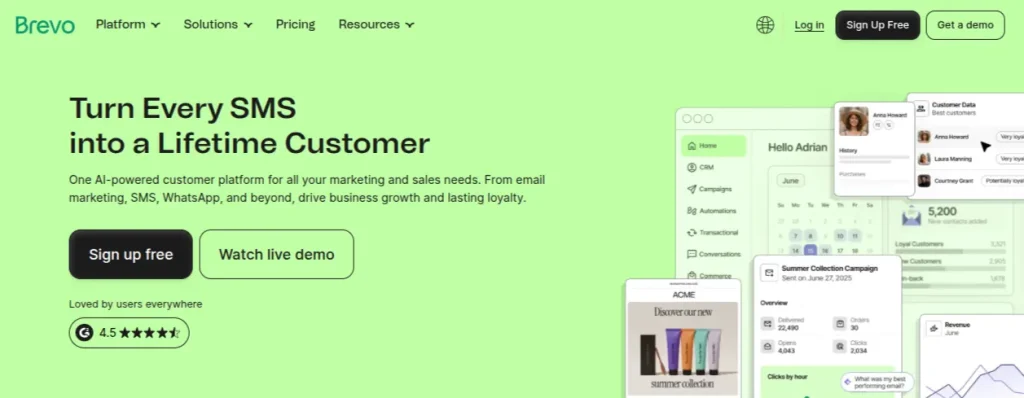
Brevo is one of the platforms I’d shortlist when I want to keep costs under control. It covers the core email marketing workflow without forcing you into an overly complicated setup, making it a practical choice for smaller campaigns and growing contact lists.
Its AI features can help with generating email content and improving campaign timing. The free plan is also useful if you’re learning the basics and want to experiment before committing to a subscription.
Key Features of Brevo
- AI-assisted email content generation
- Email campaign automation
- Send-time optimization
- Contact segmentation
- Campaign analytics
Pros & Cons
| Pros | Cons |
|---|---|
| Affordable paid plans | AI capabilities aren’t as extensive as some competitors |
| Useful free plan | Some advanced features require paid plans |
| Easy campaign setup | Automation is less sophisticated than ActiveCampaign |
| Supports email and other communication channels | Can feel limited for complex marketing operations |
Pricing: Brevo has a free plan with daily sending limits. Paid plans start at around $9/month
5. Mailchimp: Best for Beginners
My Rating: 8.5/10
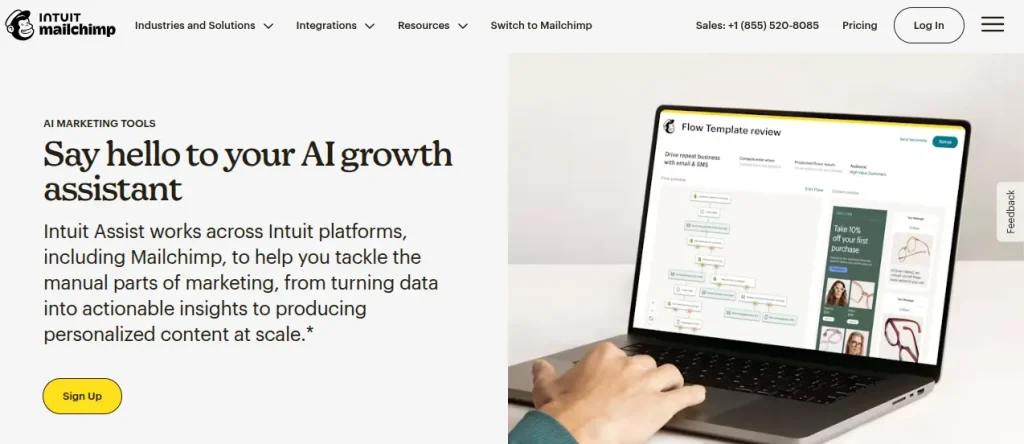
Mailchimp remains a familiar starting point for people getting into email marketing. The interface is relatively approachable, and you can build campaigns without spending days figuring out how the platform works.
Its AI features are useful for the parts of email creation that tend to cause friction, such as generating copy, refining messaging, and working on subject lines. It’s a good place to learn the fundamentals before moving into more advanced email marketing automation tools.
Key Features of Mailchimp
- AI-assisted email content creation
- Subject line suggestions
- Email campaign automation
- Audience segmentation
- Campaign analytics
Pros & Cons
| Pros | Cons |
|---|---|
| Beginner-friendly interface | Advanced features can get expensive |
| Free plan available | Free plan has limitations |
| Good selection of templates | Automation is less flexible than ActiveCampaign |
| Useful AI writing assistance | Pricing increases with audience size |
Pricing: Mailchimp offers a free plan with limited features. Paid plans start at around $13/month, depending on the audience size and selected plan.
6. GetResponse: Best for All-in-One Marketing
My Rating: 8.5/10
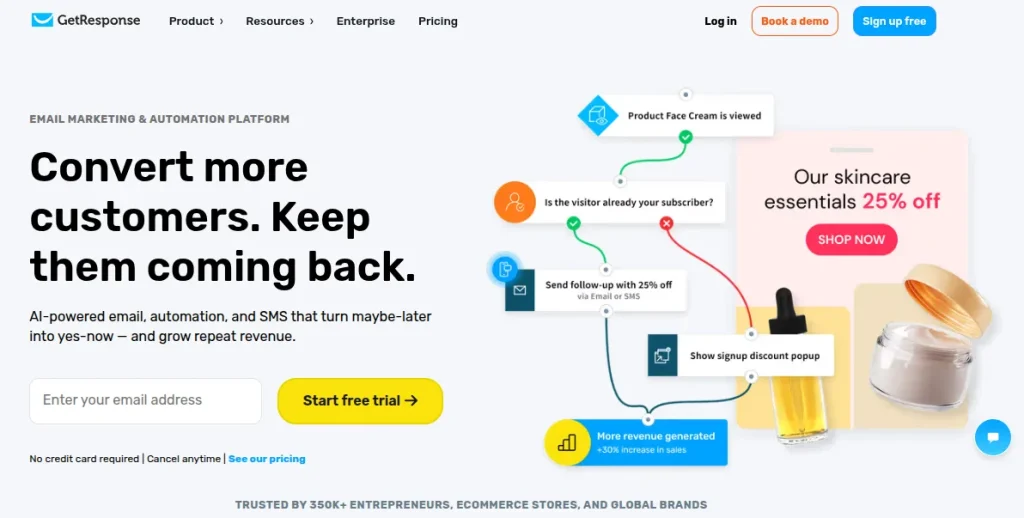
GetResponse goes beyond basic newsletters. You can use it for email campaigns, automation, landing pages, and lead generation, which makes it useful when you want fewer separate platforms in your workflow.
Its AI features help with email generation, subject lines, and campaign creation. I’d consider it a strong middle ground. It is definitely more capable than basic free email marketing tools, but not as good as some enterprise-focused platforms.
Key Features of GetResponse
- AI email generator
- AI subject line generation
- Email marketing automation
- Landing page and funnel tools
- Campaign analytics
Pros & Cons
| Pros | Cons |
|---|---|
| Broad marketing feature set | Interface can take time to learn |
| Useful AI campaign assistance | Some features are restricted to higher plans |
| Strong automation capabilities | Can be excessive for basic email campaigns |
| Good selection of templates | Pricing increases with contact count |
Pricing: GetResponse offers a free plan with limited features. Paid plans start at around $19/month.
7. Omnisend: Best for eCommerce Email Marketing
My Rating: 8.5/10
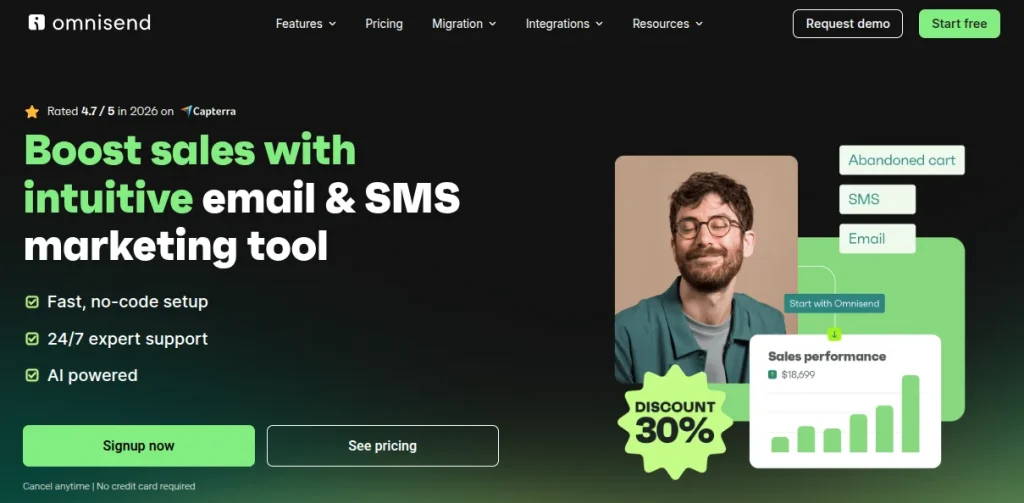
Omnisend is built with online stores in mind, so its value becomes clearer when emails need to react to shopping behavior. Abandoned carts, product interest, and customer activity can all feed into automated campaigns.
Its AI features help with email copy and campaign creation, while its automation tools handle the repetitive follow-ups. If your email strategy revolves around selling products rather than sending general newsletters, Omnisend deserves a closer look.
Key Features of Omnisend
- AI-assisted email copywriting
- Automated customer journeys
- Abandoned cart emails
- Product recommendations
- Customer segmentation
Pros & Cons
| Pros | Cons |
|---|---|
| Strong eCommerce focus | Less suitable for non-commerce newsletters |
| Useful automation workflows | Some advanced features require paid plans |
| Good integration with online stores | Pricing depends on contact and message volume |
| AI helps speed up campaign creation | Smaller feature set outside eCommerce |
Pricing: Omnisend offers a free plan with limited monthly sends. Paid plans start at around $16/month.
8. Klaviyo: Best for AI-Driven eCommerce Personalization
My Rating: 9/10
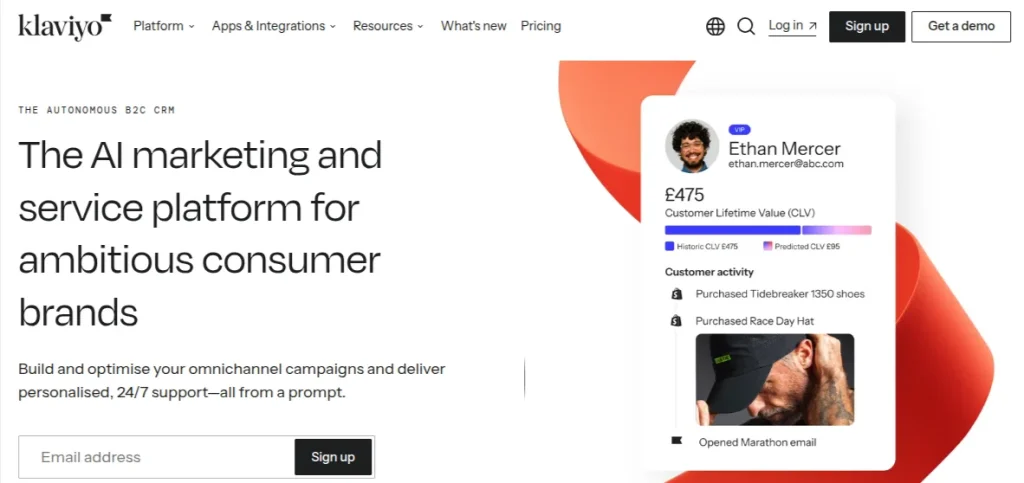
Klaviyo is one of the stronger choices if your emails depend heavily on customer behavior. It uses customer data to personalize campaigns, predict buying patters, recommend products, and decide when certain messages are more likely to perform well.
Its newer Composer AI agent can also analyze campaigns, flows, and segments and help draft marketing content. I like Klaviyo for teams that want AI to work with actual customer data rather than treating email creation as a copywriting exercise.
Key Features of Klaviyo
- AI email and subject line generation
- Predictive customer analytics
- AI-powered segmentation
- Personalized product recommendations
- Automated email flows
Pros & Cons
| Pros | Cons |
|---|---|
| Excellent eCommerce personalization | Can become expensive as contacts grow |
| Strong predictive analytics | More complex than basic email platforms |
| Powerful automation and segmentation | AI features vary by plan |
| Composer adds useful AI assistance | Better suited to data-rich businesses |
Pricing: Klaviyo has a free plan for up to 250 profiles and 500 email sends per month. Paid pricing varies according to the number of profiles and messaging volume.
9. Constant Contact: Best for Small Businesses
My Rating: 8/10
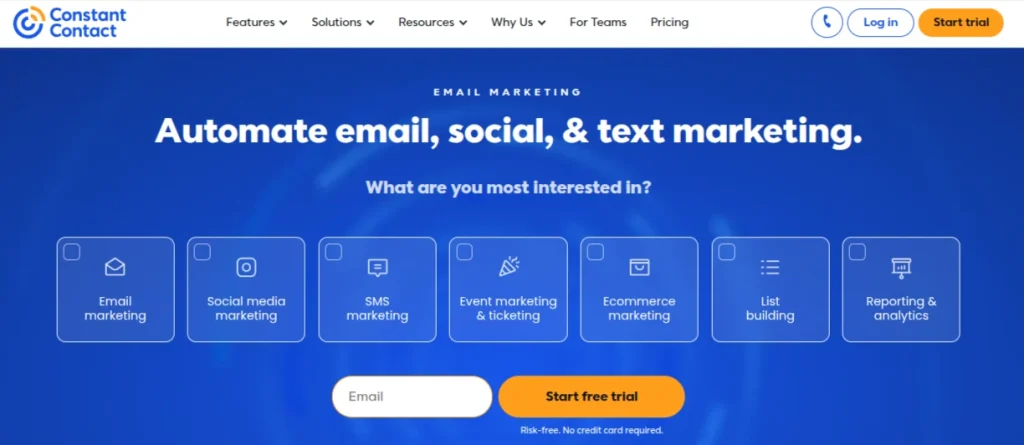
Constant Contact is a good option when you want email marketing without building a complicated marketing stack. Its AI tools can help with writing and improving email content. On the other hand, the core platform handles campaign creation, contact management, templates, and reporting.
I’d put it on the shortlist for small teams that want to get campaigns running quickly. It doesn’t offer the depth of a platform like Klaviyo or ActiveCampaign, but that can actually be an advantage when your requirements are straightforward.
Key Features of Constant Contact
- AI-assisted email content
- AI subject line suggestions
- Email templates and campaign builder
- Contact management
- Campaign reporting
Pros & Cons
| Pros | Cons |
|---|---|
| Easy to learn | Fewer advanced automation options |
| Good template library | No permanent free plan |
| Useful AI writing assistance | Can become expensive as contacts increase |
| Suitable for small teams | Less suited to complex marketing workflows |
Pricing: Constant Contact does not offer a permanent free plan. Paid plans start at around $12/month, with pricing varying based on contacts and features.
10. Salesforce Marketing Cloud: Best for Enterprise Email Marketing
My Rating: 8.5/10
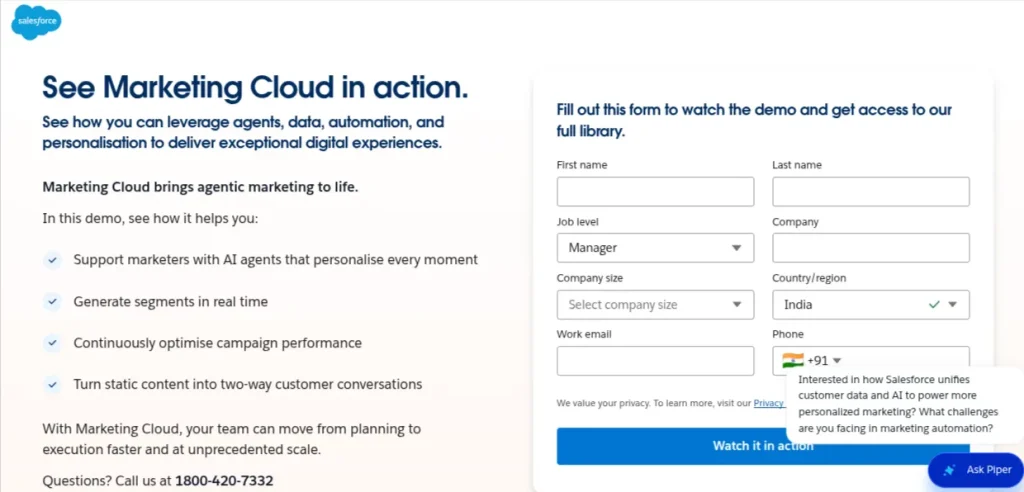
Salesforce Marketing Cloud is the heavyweight on this list. It makes sense when email is part of a much larger customer-data and marketing operation, where basic email marketing automation tools start feeling restrictive.
The current Marketing Cloud platform brings AI into campaign creation, customer journeys, segmentation, personalization, and optimization. Its Agentforce capabilities can assist with campaign creation. The Einstein features provide predictive insights and recommendations.
This is powerful stuff, but I wouldn’t recommend it for someone who only needs to send newsletters or basic promotional emails. Salesforce becomes worthwhile when the scale and complexity of the marketing operation justify it.
Key Features of Salesforce Marketing
- Agentforce AI campaign creation
- AI-powered personalization and recommendations
- Automated customer journeys
- Predictive analytics and engagement scoring
- Cross-channel marketing automation
Pros & Cons
| Pros | Cons |
|---|---|
| Extremely powerful automation and personalisation | Expensive compared with most tools on this list |
| Strong customer-data integration | Steep learning curve |
| Built for large-scale marketing operations | Requires more setup and technical expertise |
| Advanced AI and predictive capabilities | Overkill for small email campaigns |
Pricing: Salesforce Marketing Cloud Next Growth edition starts at $1,500/month per organization when billed annually. Its Advanced Edition starts at $3,250/month. Salesforce also offers smaller CRM plans with email marketing capabilities, starting at $25/user/month.
How to Choose the Best AI Tools for Email Marketing?
Picking an email platform based on the number of AI features it advertises is a good way to waste money. The better approach is to start with your actual workflow. A freelancer doing cold outreach has very different needs from an eCommerce brand sending abandoned-cart emails, and neither needs an enterprise platform by default. Use this checklist before choosing:
- Your primary use case: Decide whether you need newsletters, lead generation, cold outreach, customer retention, or eCommerce automation.
- AI capabilities: Check what the AI actually does. Content generation is useful, but personalization, segmentation, send-time optimization, and predictive features can have a bigger impact.
- Automation: Look for workflows that can trigger emails based on actions rather than relying on manual sending.
- Integrations: Make sure the platform connects with the CRM, website, eCommerce store, or other tools you already use.
- Pricing Model: Check whether you pay by contacts, emails sent, users, or features. Your cheapest option today may become expensive as your list grows.
- Ease of Use: If building a basic campaign requires hours of tutorials, the extra features may not be worth it.
- Analytics: At minimum, you should be able to track clicks, conversions, unsubscribes, and campaign performance.
- Deliverability: AI-generated copy means little if your emails consistently land in spam. Check the platform’s deliverability tools and sender-authentication support.
- Room to grow: Think about where your email strategy could be a year from now. Switching platforms later can be a painful exercise.
Final Words
You don’t need ten email marketing AI tools in your workflow. You probably need one that fits the work you actually do. For outreach, I’d start with Snov.io. For serious automation, ActiveCampaign is a stronger bet. If your work revolves around an online store, Klaviyo or Omnisend makes more sense. Beginners can start with Mailchimp or Brevo without committing to an expensive setup.
The bigger lesson is to treat AI as an assistant rather than the entire strategy. A well-written email still needs a good offer, the right audience, and a reason for someone to care. Pick the tool that removes the most repetitive work from your workflow, learn it properly, and build from there.
Frequently Asked Questions (FAQs)
There isn’t one winner for every workflow. ActiveCampaign is a strong choice for advanced automation. Klaviyo stands out for eCommerce personalization. Brevo is attractive when keeping costs low matters.
Several platforms offer free options, including Brevo, HubSpot, Mailchimp, GetResponse, Omnisend, and Klaviyo. The limits differ considerably, so check subscriber counts, monthly sends, and available AI features before choosing one.
For beginners, Brevo and HubSpot are worth considering. Brevo is particularly appealing for affordable campaign automation. HubSpot makes more sense if you also want CRM functionality.
Yes. AI can assist with email creation, audience segmentation, personalization, send-time optimization, and automated customer journeys. The exact level of automation depends on the platform.
They can be, but don’t pay extra merely for an AI label. Features that improve targeting, timing, personalization, or automation generally have more practical value than an AI tool that only generates another subject line.
Yes, particularly for prospecting and personalized cold outreach. Snov.io is a stronger fit for this use case than traditional newsletter platforms because it combines prospect discovery with AI-assisted personalization and automated sequences.
About The Author