You got through the technical round, yes, your resume is exceptional, but did you get the job? Probably not, and this happens more often than many of you realize. It might surprise you, but 9 out of 10 times, the gap is not what you think. It’s actually reflected in how you work, communicate, and even show up for the people around you. That’s where the concept of soft skills comes in, and in 2026, they matter more than any other aspect.
What Are Soft Skills?
Soft Skills are the human abilities that actually shape how you interact with others, solve problems for others, and handle pressure. Soft skills are evaluated by behavior, unlike hard skills, which can be measured or taught. Soft Skills are the difference between someone who is just competent and someone who is genuinely valuable.
Why Is 2026 Different, Considering Soft Skills?
With the rise of AI in 2026, automation now handles the majority of technical work, leaving the work that actually requires humans. Now, employers are not hiring on the basis of what you can do today, but they are looking for a long-term investment. An investment in how you will grow, collaborate with other team members, and potentially become a leader in an environment that constantly shifts. Soft skills development has now become an essential aspect of being a professional in today’s times.
In other words, as we move forward into a future filled with AI, employers will be more concerned with how you grow and learn to collaborate and lead as the workplace continues to change than with what you can currently do today. That means having developed many of these “soft” skills has now become more of an expectation to have as part of your professional competencies, rather than something that would get you a job.
What are the Soft Skills Employers Are Interested In?
Good Communication
The skill every employer is looking for is communication. Communication means much more than just having good speaking skills; it’s about listening attentively (not barrel hunting while someone else is speaking), writing clear and short emails and report cards, changing your tone based on who you’re talking with, and giving and receiving feedback openly, without defensiveness.
During an interview process, an employer looks at how well you communicate through writing and orally; they will be watching how structured your answers are during interview questions, if you are staying on-topic while answering, and how you manage through follow-up questions. It will be hard for them to overlook candidates who go on too long to explain an answer, even if you provide a perfect response.
Adaptability
The workplace of 2026 will continue to be hybrid, will move rapidly, and will experience frequent changes. Employers are looking for candidates who do not just adjust to workplace change but actively engage with it, rather than resisting it. An adaptable employee will willingly accept any additional responsibilities; will recover quickly from any issues they faced, and will welcome any constructive criticism without allowing their ego to prevent them from seeing how they could improve.
Emotional IQ
This is one of the biggest areas that is often overlooked during interviews. Emotional intelligence is the ability to understand your own emotions and how they affect others’ emotions as well. Employees who demonstrate high emotional intelligence can handle frustration with maturity, build stronger connections with coworkers and customers, and make sound decisions under pressure, since their feelings are not driving their decisions.
Employers are now more frequently using behavioral interview questions to assess an applicant’s emotional intelligence. If you hear more and more questions like this, “tell me about a time when…”, it is likely because employers are now looking for an applicant’s emotional intelligence beneath the surface of the question.
Critical Decision Making & Problem Solving
Everybody can identify a problem. Employers want individuals who can analyze the problem, assess the potential angle of the problem, and provide a rational means for moving forward. The goal is to do this without requiring constant direction. This is one of the most sought-after soft skills for those jobs with an emphasis on strategy or leadership, or for roles working with customers.
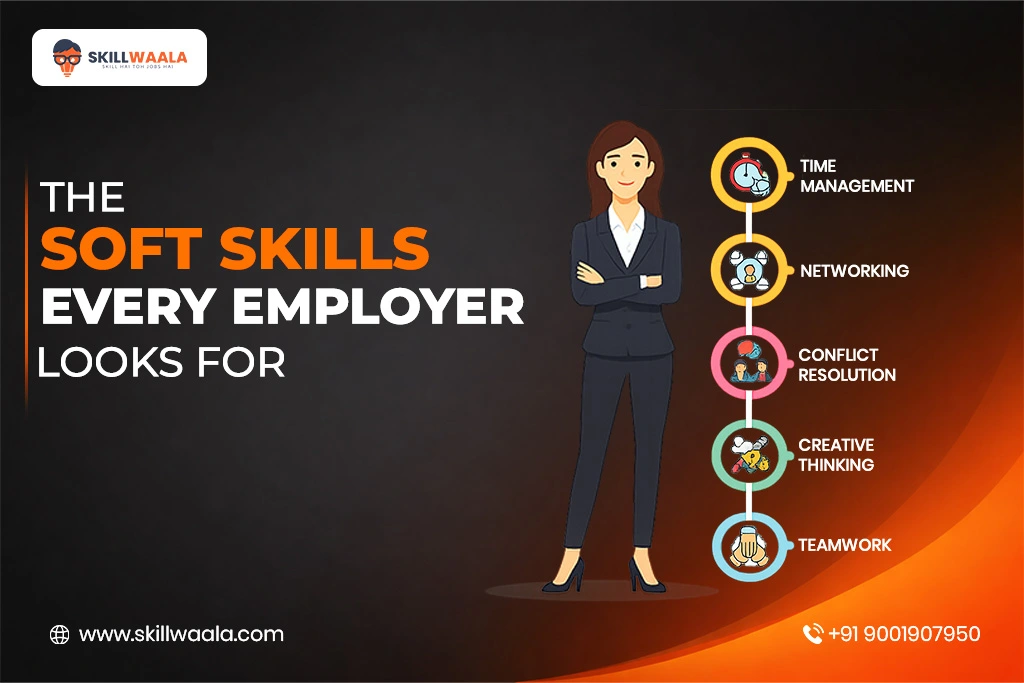
Team Collaboration &Teamwork
Remote & hybrid work has made it harder to collaborate but has made it an even bigger emphasis in today’s workforce. Therefore, employers look for individuals who are willing to accept credit for their contribution, willing to communicate, and understand that success as a group is much greater than individual success.
Time Management & Accountability
No one wants to babysit a good employee. Therefore, if you can complete your work on time, handle all of your own work without needing to be reminded, and take ownership of your mistakes as soon as you realize they have occurred, you will be noticed immediately. Accountability is not exhibited nearly as much as it should be at work and may become one of the only superpowers left in today’s work environment. Being a leader is about more than just having a title.
It means being proactive, helping others, and being someone people can rely on to lead them through tough situations. Employers will also need employees who develop the ability to lead without the benefits of formal authority, especially in line with the workforce of 2026.
What are the Soft Skills Employers Look For?
There are several categories that companies use to evaluate applicants for various jobs:
- Interpersonal skills (communication, empathy, conflict resolution, teamwork)
- Self-Management skills (Time Management, Accountability, Stress Management, Adaptability)
- Thinking Skills (Critical Thinking, Creativity, Decision Making, Problem Solving)
- Leadership Skills (Motivation, Mentoring/Coaching, Strategic Thinking, Influence)
Each job may require a different balance of the four skills described above, depending on the industry in which you are employed.
Interviewing for Soft Skills
Simply listing on your resume that you “communicate well” is not enough. You must demonstrate your ability to communicate through past experiences. One method for demonstrating your ability to demonstrate the four soft skills described above is the STAR method: situation, task, action, and result. This provides an example of how you applied the four soft skills in a specific instance.
Instead of merely mentioning being able to adapt, present an occasion where a project shifted significantly, and your leadership style was effective throughout that pivot. For example, if a manager were asked about their weaknesses, this could be interpreted as a way for them to demonstrate soft skills development, and so they would be asked to respond with reflective growth and to value feedback. The listener is evaluating your body language/tone as well as the content of what you say; this means that every part of your answer will be measured.
Developing Soft Skills: Can They Develop?
Yes, they are very much developable. Contrary to what most people may believe, while certain characteristics may seem unalterable, soft skills can indeed be improved upon with very deliberate effort. Get candid feedback from colleagues/mentors, especially since most of us have some degree of unawareness through our own blind spots.
Communicate better by putting yourself into situations where they may be surprisingly difficult for you, presentations, writing, leading meetings, etc. Read varied genres on psychological principles, leadership in corporations and groups, and human behaviors, as they will significantly build your emotional intelligence more quickly than formal courses.
Reflect on your weekly interactions to find trends within your own behaviors; these trends would otherwise be difficult for you to identify.

Final Thoughts
Technical skills will get you a job interview; soft skills are what enable you to keep working at that same job to become a leader within that company and provide you with the charter to lead over time as you display growing leadership capabilities through soft skill development.
Your person-to-person connection ability through communication and adaptability will be more valuable than any other skill set in 2026 as AI takes over most of the mechanical tasks; do not treat soft skills as a secondary concern; rather, view them as the job.
Frequently Asked Questions
The five most valuable soft skills are communication, adaptability, emotional intelligence, analytical thinking, and the ability to work in teams. There is a growing value placed upon demonstrating accountability and showing leadership qualities.
Considering how you conduct yourself during an interview (tone, body language, communication style, and how you mentally handle the expected level of questioning) is a great opportunity to demonstrate your soft skills.
Soft skills can most definitely be improved, but developing them requires self-awareness, effort, and consistent, relevant feedback. There will always be people who have a natural advantage; however, anyone who works diligently in an environment promoting growth and exhibits an effort to use current feedback will experience significant improvements.
Soft skills can generally be categorized into four distinct types: interpersonal skills, self-management skills, cognitive (thought-based) skills, and leadership skills.
Soft skills are not “more important”; they are two distinct skill sets. Soft skills serve as the primary differentiator between similarly skilled individuals performing similar functions with the same level of qualification & training. In contrast to soft skills, technical skills are a necessary function within an enterprise, whereas soft skills serve as drivers of an individual’s or a group’s development.
About The Author